



Spaceman Strategy Guide: Smart Cashout Tactics and Bankroll Methods for 2026
Provider:
Pragmatic Play
Game Category:
Slot
Risk Level:
Balanced
Payout Percentage:
96.5%
Smallest Bet:
1
Maximum Stake:
100
Autoplay:
Nope
Launch Date:
24.03.2022
Approaching Spaceman strategically requires honesty about what is possible and what is not. The game carries a 4.5% house edge built into its 95.5% RTP, and no cashout sequence eliminates this disadvantage. What strategy can do is shape session variance, balance hit frequency against win size, and impose discipline that protects a player's bankroll. The frameworks discussed below reflect the methods used by experienced crash game players in 2026, and none of them comes with a guarantee of profit.
Reality Check: Can Anyone Beat Spaceman?
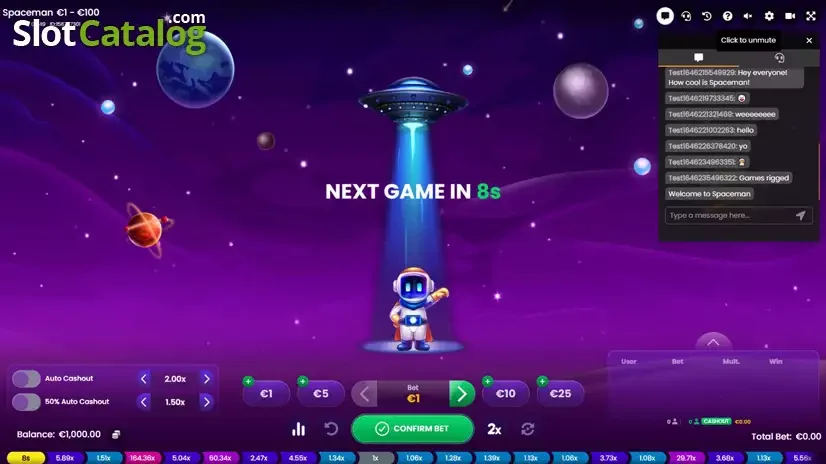
The mathematical baseline is unambiguous. A 95.5% RTP means an expected long-term loss of C$4.50 for every C$100 wagered. Across 10,000 wagered units, the expected loss climbs to C$450. This figure cannot be reduced through clever cashout timing, since Spaceman's RNG produces independent and unpredictable outcomes round by round.
The strategic conclusion: the goal is not to "win" against the house, but to manage variance, structure decision-making, and avoid the common mistakes that turn a recreational session into a financial problem. Players seeking a guaranteed-profit system should look elsewhere; no such system exists for negative-expectation games.
| Total Wagered | Expected Loss (95.5% RTP) | Expected Loss (96.5% RTP) |
|---|---|---|
| C$100 | C$4.50 | C$3.50 |
| C$1,000 | C$45.00 | C$35.00 |
| C$10,000 | C$450.00 | C$350.00 |
The Mathematics: RTP, Probability, and the Crash Range

Strategy decisions become much clearer once players understand the underlying numbers. Pragmatic Play built Spaceman on an HTML5 architecture that runs identically across desktop and mobile, so any strategic framework that works in one environment transfers to the other without modification. AGCO/iGaming Ontario licensed Spaceman play requires verified participants aged 19 and older, with KYC documents on file before any withdrawal can be processed.
What 95.5% RTP Looks Like in a Real Session
Across 100 rounds at C$1 each, the expected return is C$95.50. The standard deviation of that result is large; the typical 95% confidence range falls roughly between C$50 and C$140. Outcomes outside that range are not unusual for a single session and do not indicate game malfunction. Variance smooths out only over very large round counts.
Where Most Crashes Actually Happen
Slotsjudge's simulator data, drawn from 10,000 spins per day, shows most crashes between 1.35x and 500x, with the median crash near 2.0x. Roughly 30% of crashes happen below 1.5x, 50% below 2.0x, and 90% below 10x. These percentages provide the foundation for choosing a sensible cashout target. The fact that past crashes have no influence on future ones rests on Spaceman's Provably Fair RNG architecture, which produces a verifiable cryptographic hash for every round that any player can audit after the fact. This independence is what makes statistical strategy possible at all.
The Real Probability of a 5,000x Maximum Win
The 5,000x outcome is mathematically possible but extraordinarily rare — estimated at roughly 1 in 50,000+ rounds. At 60 rounds per hour, that translates to approximately one occurrence per 800+ hours of active play. No reasonable session strategy should be built around this outcome.
Strategy 1: Conservative Auto Cashout at 1.5x to 2.0x
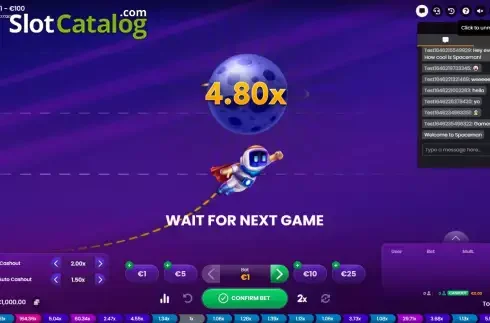
The conservative approach prioritizes hit frequency over win size. Auto Cashout is set at 1.5x or 2.0x; since around half of all rounds reach the 2.0x mark, the strategy delivers small but consistent returns.
The numbers: at 2.0x Auto Cashout, the empirical hit rate is approximately 50%. A C$1 stake produces an expected per-round value of around -C$0.045 (matching the house edge), with very low session-level variance. Sessions tend to follow the expected loss curve closely without dramatic swings in either direction.
Best suited to: players who want longer playtime and dislike high-variance swings. Less suitable for: players hoping for memorable wins, since the 2.0x cap structurally prevents large multiplier outcomes.
Strategy 2: Balanced 50% Cashout at 2.0x with Manual Hold to 5.0x

This framework uses Spaceman's signature 50% Cashout to construct a hedged position. The setup: configure Auto 50% Cashout at 2.0x, then hold the remaining stake for a manual cashout at a higher target such as 5.0x.
A Worked Example
Imagine a C$10 stake using this configuration. When the multiplier hits 2.0x, Auto 50% Cashout fires, locking C$10 of value (recovering the original stake). The remaining C$5 of position stays in play. If the player cashes out the remainder manually at 5.0x, the total payout is C$10 (locked) + C$25 (remaining at 5.0x) = C$35. If the round crashes between 2.0x and 5.0x, the player still walks away with the locked C$10 — a break-even outcome for the round.
The Variance Profile
This hedged structure dramatically reduces the worst-case outcome compared to a manual-only approach. Above 2.0x, the floor is break-even; the ceiling extends to whatever manual target the player chooses. Aviator and JetX cannot replicate this profile because neither offers a 50% Cashout function.
Best suited to: intermediate players who want upside exposure with built-in downside protection.
Strategy 3: High-Variance Manual Cashout at 10x or Higher

The high-variance framework targets multipliers of 10x, 50x, or 100x+ via manual cashout. Players need to accept that the empirical hit rate is below 10%, often well below. Cashouts at 10x happen in about 8% of rounds; at 50x, around 1.5%; at 100x, around 0.7%.
The math: a 10x strategy generates roughly an 8% session win rate with 10x return per win. The expected value is still negative (the house edge does not change), but the variance is much higher. Players need the bankroll and the temperament to absorb 12+ consecutive losses without changing approach.
Important warning: this strategy is appropriate only for players with bankrolls large enough to survive 25+ consecutive losses without affecting financial stability. It is not appropriate for players in distress, players trying to recover earlier losses, or players with limited disposable income.
Bankroll Management for Canadian Players
Solid bankroll management is the strongest tool available against accelerated loss.
The 1% Rule
Maximum bet per round should never exceed 1% of total bankroll. With a C$500 bankroll, the maximum bet is C$5, which provides enough cushion to survive 100+ consecutive losses without depletion. Breaking this rule is the single fastest path to a wiped-out balance.
Stop-Loss and Win-Goal Targets
Setting a stop-loss (such as -20% of session bankroll) and a win-goal (such as +30%) before the session begins removes emotional decision-making in the moment. AGCO-licensed Canadian operators offer deposit limit and loss limit tools that enforce these targets at the account level, so players do not have to rely on willpower alone.
Session Time Limits
Spaceman runs at about 60 rounds per hour at active play. Sessions over 30 to 45 minutes correlate with worse decision quality. A self-imposed 30-minute cap is a sensible default. Players who find this cap difficult to keep should treat the difficulty as a signal worth examining.
Five Mistakes Spaceman Players Often Make
Certain patterns recur across crash game communities. Each one below comes with a corrective approach.
Doubling Bets to Recover Losses (Martingale)
The Martingale system collapses against the 4.5% house edge during any extended losing streak — and such streaks are mathematically inevitable given enough rounds. Crash game communities consistently identify Martingale as one of the leading causes of bankroll destruction.
Believing Past Crashes Predict Future Ones
The RNG produces independent outcomes. Past results have no influence on the next round. The "gambler's fallacy" — believing a particular outcome is "due" — is a well-documented cognitive bias and produces consistently bad bets.
Skipping Demo Mode Before Real Money
Strategy frameworks should be tested in demo mode before being applied with real money. Demo mode is functionally identical to real-money play. Skipping it adds avoidable variance to early sessions.
Disabling Auto Cashout Because It Feels Better to Play Manually
Manual cashout under time pressure introduces emotion into the decision. Auto Cashout removes that emotion and executes the strategy as designed.
Continuing After a Significant Loss (Tilt)
Cognitive performance drops measurably after a significant loss. A five-minute break after any session loss exceeding 50% of bankroll is good practice. Resuming within that window typically leads to faster bankroll degradation.
Strategic Comparison: Spaceman versus Aviator
Although both are crash games, Spaceman and Aviator reward different strategic approaches.
| Strategic Element | Spaceman | Aviator |
|---|---|---|
| RTP | 95.5% / 96.5% | 97.0% |
| 50% Cashout | Available | Not available |
| Pace | Fast | Slower |
| Reaction Time Required | Higher | Lower |
| Best Strategy | Hedged 50% Cashout | Disciplined Auto Cashout |
The takeaway: players who want maximum reaction-time tolerance choose Aviator. Players who want a structural hedge during partial cashouts choose Spaceman. Neither game has an objective strategic advantage; the right choice depends on personal preference.
Drops & Wins Tournaments: A Strategic Layer on Top of Spaceman
Pragmatic Play runs Drops & Wins promotional tournaments with daily prize pools that reach $5,000, awarded through leaderboards tied to high-multiplier cashouts. For strategy-focused players, this creates a tactical decision: chase tournament points with high-variance cashouts (10x or above) and accept long losing streaks, or stick to disciplined Auto Cashout strategies and sacrifice meaningful leaderboard positioning. The cleanest approach treats tournament play as a separate session with its own allocated budget, distinct from baseline bankroll-management play. Participation depends on the operator; BetMGM Casino Ontario and PartyCasino Canada both currently include Spaceman in their Drops & Wins lineup. Interac e-Transfer is the standard CAD funding method across AGCO-licensed operators that participate.
Responsible Play: Knowing When to Step Away
The most important strategy in any negative-expectation game is the ability to stop when continued play causes real harm. The signs and resources below are essential reading for any player.
Warning Signs of Problem Gambling
These behaviours indicate that gambling has moved beyond entertainment: chasing losses with progressively larger bets; hiding the time or money spent on gambling from family or friends; using funds intended for essential expenses; thinking constantly about gambling outside of play; and being unable to stop at pre-set limits. Any combination of these signs deserves immediate attention and a conversation with someone who can help.
Free Help Available in Canada
Canadian players have free, confidential support available around the clock. ConnexOntario operates a 24/7 helpline at 1-866-531-2600 in English, French, and other languages on request. PlaySmart.ca, run by OLG, offers detailed information about warning signs and recovery options. My PlayBreak, accessible through OLG.ca, allows players to self-exclude from Ontario's regulated casino sites for a defined period. Gambling Therapy and BeGambleAware provide additional international resources accessible from Canada.
Strategy FAQ
What is the best Auto Cashout setting for Spaceman?
There is no universal best. Conservative players use 1.5x or 2.0x; balanced players combine 2.0x with 50% Cashout; high-variance players use 5x or higher. All settings produce the same long-term RTP.
Does the Martingale system work on Spaceman?
No. Martingale fails against the house edge during any extended losing streak. It is a leading cause of bankroll loss.
Can players predict when Spaceman will crash?
No. The RNG produces independent, cryptographically verifiable outcomes. No pattern exists in past crashes that predicts future ones.
Should the 50% Cashout function be used every round?
For balanced strategies, yes. The hedge protects the downside without limiting the upside on the remaining position.
What is a safe daily Spaceman budget?
A budget that, even if entirely lost, would not affect the player's essential expenses. This figure varies by individual and should be enforced via the casino's deposit limit tool.
Are some times of day better for playing Spaceman?
No. The RNG operates the same regardless of time. The belief that certain hours are "luckier" is a cognitive bias.
Is Spaceman strategy different in demo mode versus real money?
The mechanics are identical, so any framework that works in demo applies to real money. The main difference is psychological — without real money on the line, players sometimes make more aggressive cashout choices than they would otherwise. Demo mode should be used to practice the chosen framework, not to test extreme variations.
Final Word and Next Steps
Spaceman strategy lives within a fixed mathematical envelope. The available tools — Auto Cashout, 50% Cashout, bankroll discipline — manage variance and structure decisions, but they cannot eliminate the house edge. Used wisely, they keep sessions enjoyable and protect against the worst outcomes. Used poorly, they accelerate loss. Players experiencing distress should contact ConnexOntario at 1-866-531-2600 for confidential 24/7 help. For mobile-specific tactical adjustments, the Spaceman Mobile Guide covers the practical differences between desktop and mobile play.